
The Indian State does not believe in the rule of law. It does not even recognise the need to follow treaties that it itself signed. And so it is refusing to shell out to Cairn; and, as a consequence, has brought on the Paris humiliation, notes Mihir S Sharma.

Weeks after the second wave peaked in many parts of the country, we are rapidly forgetting what happened to our hospitals, cautions Mihir S Sharma.

Unless public health is prioritised over swift re-opening, the chances are that a third wave will hit India sooner than we would like.

What do we know about India's devastating second wave, and can we assign responsibility for it?

If the government had paid enough to begin with, or if it had made serious advance purchase commitments that allowed the vaccine producers to mobilise necessary investment, then it is possible to imagine more free or subsidised vaccines such as are available in developed economies, asserts Mihir S Sharma.

'The Union government has discouraged state and local governments from imposing restrictions on their own.' 'That advice should be withdrawn,' asserts Mihir S Sharma.
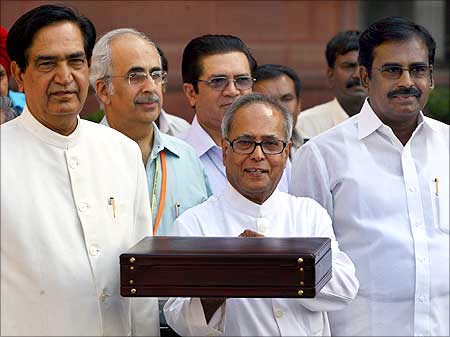
The sad truth is that the debt-to-GDP ratio will shoot up close to 90 per cent in the coming year, and the fiscal deficit glide path does not promise to reduce it substantially any time soon, predicts Mihir S Sharma.
'In the real economy, the scars of the pandemic will continue to define 2021.' 'It is still hard to tell the effect on unemployment, migrant workers, poverty, and the informal sector of the lockdown and of the pandemic,' observes Mihir S Sharma.
We knew from the moment the pandemic took hold that this would be a long haul -- at least 12 to 18 months. Nothing should have changed that assessment, says Mihir S Sharma.

'India is not so distant from years of high and entrenched inflationary expectations that it should start trying to play games with the economy the way the West's central bankers think they are entitled to,' argues Mihir S Sharma.
'India resembles not just the more turbulent bits of its own past, but other 'managed' democracies, where all institutional strength and independence have been hollowed out to serve political power,' notes Mihir S Sharma.

The lockdown should have been used to drum into Indians' head the reasons for social distancing and the necessity for it, and the costs of not applying it in our daily lives and it should have been used to set up the systems that would manage large numbers of infected, observes Mihir S Sharma.
'Employees may well be expected to be on call at almost all times -- much like the standard Indian approach to the workday,' points out Mihir S Sharma.

This is one of those crises where it does not only matter that you do something, but how you do it, suggests Mihir S Sharma.
'Every strongman leader is faced with the same opportunity: Harness the increased societal panic to amass more power,' warns Mihir S Sharma.

'As 1.3 billion people wait for our prime minister to tell us what to do and then vanish again from our television screens, it is worth noting that this is not how the rest of the world is being led,' points out Mihir S Sharma.
What might be useful is targeted assistance to those sectors and individuals that are disproportionately affected, suggests Mihir S Sharma.
'There appears to be no end to the errors that our leaders are willing to commit and no risk they are unwilling to run,' notes Mihir S Sharma.

'If such inflows materialise, what will be the effect on the rupee's value -- and therefore on exports growth, the only sustainable path to recovery?', asks Mihir S Sharma.

As long as even one Indian holds aloft Ambedkar's portrait and recites the Preamble, the Republic remains alive, says Mihir S Sharma.
